
Quotes, quotes, quotes. You’ve had three designers out, the drawings look almost identical, yet the prices are wildly different. Why?
Before you tackle your next custom closet project—whether you’re hiring a pro or DIY-ing—you need to know what’s happening behind the scenes. Having managed the operations of an independent custom closet company for over eight years, I’ve seen exactly how the “sausage is made.” From the design desk to the manufacturing shop to the final installation in your home, here is the insider intel you need to make an informed decision.
The Key Takeaway
The custom closet industry thrives on “lump sum” pricing that hides the variables. These 7 secrets are designed to strip away the mystery so you can finally compare your quotes “Apples to Apples”. By the end of this post, you’ll know exactly which “upgrades” are worth the investment and which are just high-margin add-ons.
Secret #1: Is this Particle Board?
When homeowners hear the word “particle board,” they usually think of that flimsy, “box-store” bookshelf that wobbles the minute you put a book on it. In the custom closet world, that is a myth we need to bust.
The Industry Standard: TFL (Thermally Fused Laminate)
The “secret” is that high-end designers aren’t using thin, fold-up boards. We use 3/4-inch industrial-grade melamine, technically known as TFL. Here is why this matters for your quote:
- Durability vs. Aesthetics: TFL is a dense, high-pressure core that is incredibly strong. The outer coating isn’t just “printed paper”; it’s a thermally fused layer that can mimic the texture, grain, and feel of real wood without the maintenance of sanding and staining.
- The Edge Banding Magic: Because these boards have a pressed-wood core, we use a process called “edge banding.” We use heat and industrial adhesive to seal the raw edges with a matching (or contrasting!) strip.
- The Designer’s Edge: Here is a pro tip: You don’t have to stick to one color. For a high-end, custom look, you can request a contrasting edge band. Imagine a light wood-tone panel with a dark, sleek edge—it creates a “framed” architectural look that immediately elevates the space.
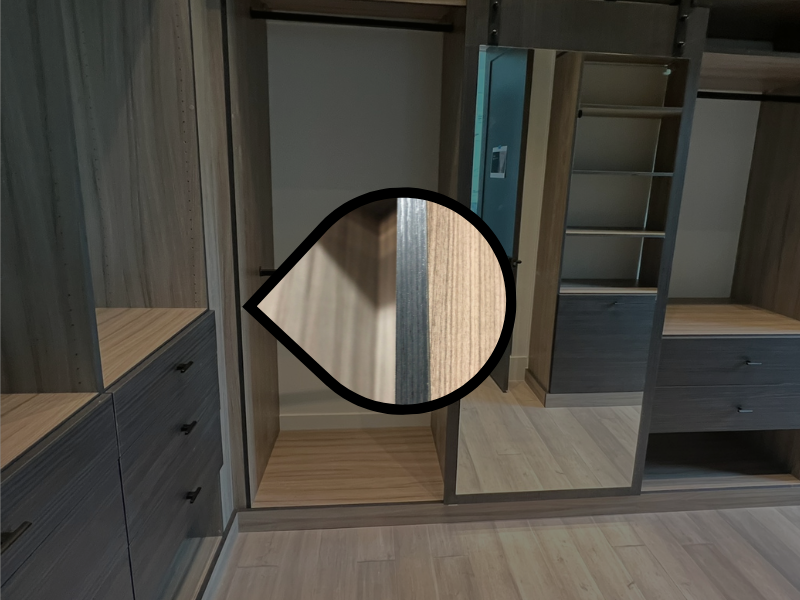
The Bottom Line: If a quote seems suspiciously low, they might be using a thinner board or a lower-grade finish that won’t hold up to the weight of your wardrobe. Anything thinner than ¾ – inch thickness is lower quality, anything above ¾-inch is for aesthetics and upgrading your price.
Secret #2: The “All-In-One” Quote Trap
Most closet companies give you one “lump sum” price. They don’t itemize. Why? Because it hides the variables. If Company A is $500 cheaper than Company B, it’s usually because of the depth of the boards (12″ vs. 14″) or the mounting style (wall-hung vs. floor-mounted).
Pro Tip: Always ask, “Are these panels resting on the floor or hanging on a rail?” Floor-mounted looks more “built-in” but requires more material and precise labor.
Secret #3: The Drawer Debate
Drawers are where the budget lives or dies.
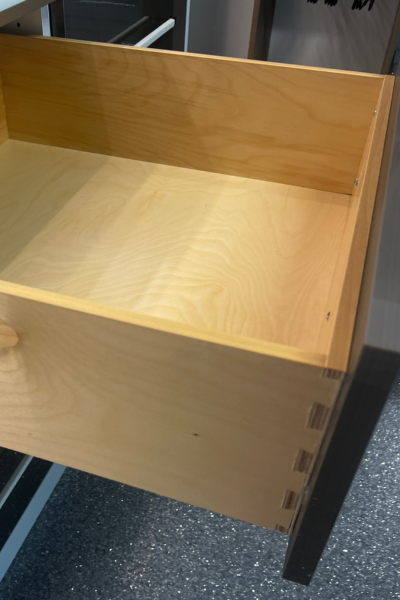
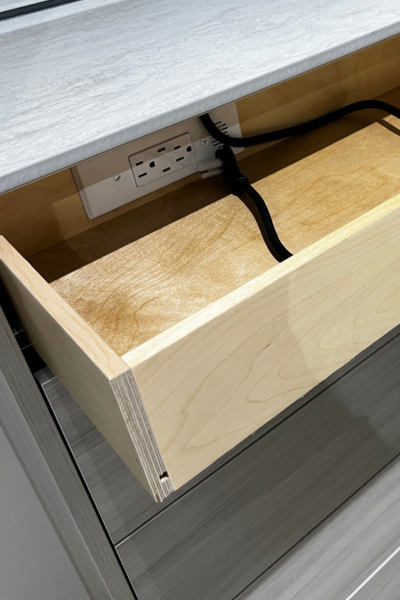
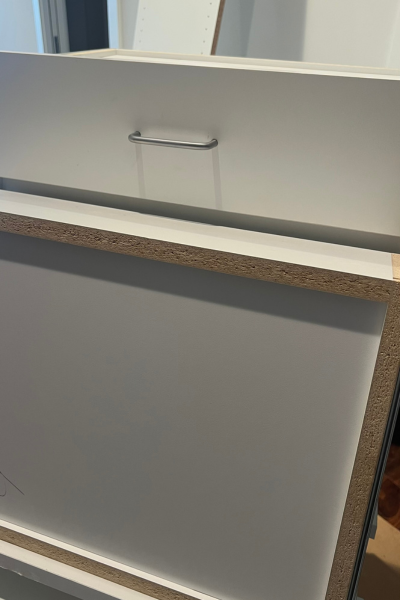
- The Wood Drawer: You might see “dovetail” construction (high-end, interlocking wood) or “stapled” sides. Both work, but the price difference is significant.
- The Melamine Drawer: Some companies use the same 3/4″ closet material for the drawer boxes. It matches the closet perfectly and is incredibly sturdy, but it takes up more “interior” drawer space than a thinner wood box material. Neither is “wrong,” but you should know which one you’re paying for.
- The Drawer Slides: Full extension or soft-close. Both work but have different costs. Either could be your comparative quotes as the company’s standard drawer slide, making them look either higher or lower in comparison.
Secret #4: Accessories are the “High-Margin” Add-ons
Sales consultants love accessories because they are easy upgrades and usually where the trends happen that you see on Pinterest.
- The Lighting Secret: Lighting is the biggest cost-driver. Why? Because a pro company isn’t just sticking on a battery-powered strip; they are routing grooves into the panels to hide wires for a “Plug and Play” system.
- The DIY Hack: If you’re on a budget, skip the valet rods, tie racks, and acrylic dividers in the initial quote. You can find almost identical versions on Amazon later and install them yourself with two screws. Save your professional budget for the structure—the parts you can’t easily change later.
- Hardware Mark-ups: Standard hardware is usually a simple knob or a handle. The more desirable choices are an upgrade. Pro Tip: Ask your salesperson if their installers will install your hardware if you buy it from another source. This way you will avoid the markup if you source and purchase on your own. This also avoids ‘Hostage Hardware’ – using proprietary parts you can’t replace yourself.
Secret #5: Your Walls Are Never Straight
Measurements go wrong—even for experts. If a designer measures while your clothes are still hanging, they are guessing.
- What to watch for: A true pro takes “High, Medium, and Low” measurements because walls bow and floors slope.
- The Obstacle Course: Make sure they see the outlets, cable boxes, and floor vents. If a drawer is built right over an outlet, it won’t close. A great company does a “Check Measure” after you’ve cleared the closet but before they cut the design.
Secret #6: The “Designer” is Often a Commissioned Salesperson
They may go by “Closet Designer” or “Closet Consultant,” but at the end of the day, they are professional salespeople. In this industry, they typically work on a 10% commission. This isn’t meant to scare you, but it’s vital perspective: the person sitting at your kitchen table has a financial stake in the outcome of this conversation.
- The Training vs. The Talent: Most consultants have a natural affinity for design, but their formal training is usually focused on space planning within the specific limits of their company’s software. They aren’t just designing for your shoes; they are designing within a pre-set catalog of parts and pieces.
If a designer steers you away from a specific layout, it might not be because it “won’t work”—it might be because their factory doesn’t cut truly custom parts, and their software won’t let them “drag and drop” what you’re asking for.
- The “Tick, Tick, Tick” of the Sale: In the closet industry, time is the salesperson’s inventory.
- The Goal: To close the deal during the initial consultation. That is the highest return on their time investment.
- The Reality: You, the homeowner, want to sit with the plans, sleep on the price, and maybe compare quotes.
Every time you ask for a redesign to whittle away the cost, or send over a competitor’s quote to discuss the differences… Tick. Tick. Tick. Their hourly earnings on your project start to drop.
The Insider Tip: Understanding this “Tick, Tick, Tick” helps you stay in the driver’s seat. Don’t feel rushed to sign just because the consultant is losing steam. A true professional will put in the time to earn your business, but knowing their “time-is-money” mindset explains why they might push for a signature before they leave your house.
Secret #7: The Installer is More Important Than the Designer
The best design in the world fails if the installation is sloppy.
- The Subcontractor Risk: Ask if the installers are company employees or independent subcontractors.
- In-house installers have a direct line to the shop and the designer. If something is cut wrong, an in-house team can collaborate and fix it fast. A subcontractor might just “make it fit,” which isn’t what you want for a custom price tag.
Conclusion: Don’t Sign Under Pressure
It’s a stressful process, and many companies will try to get you to sign the day of the consultation. But remember, if you can’t tell if you’re comparing “Apples to Apples,” you aren’t ready to buy.
The best way to stop the ‘Tick, Tick, Tick’ of a high-pressure sale is to walk into the room with a plan. I have “How to Compare Closet Quotes Like an Insider.” This workbook is designed to help homeowners prepare before meeting with closet designers and to take the mystery out of comparing the closet quotes. You will be more confident in knowing which closet company to sign with or even if you want to take on the project on your own. This workbook will help you organize your thoughts and save everyone’s time.
If you’d like to be the first to know when it’s ready, you can join the waitlist here. As a thank you for your patience, I’ll give you instant access to my ‘5 Red Flags’ guide so you don’t get caught in the common quote traps we discussed above.